Historical Review
My intention in my paintings has been to create visual symbols that articulate a gentler and, I believe, viable relationship between humanity and the rest of nature. A new cultural paradigm is needed if humanity is to avoid what is clearly the greatest danger to civilization-destruction of the environment.
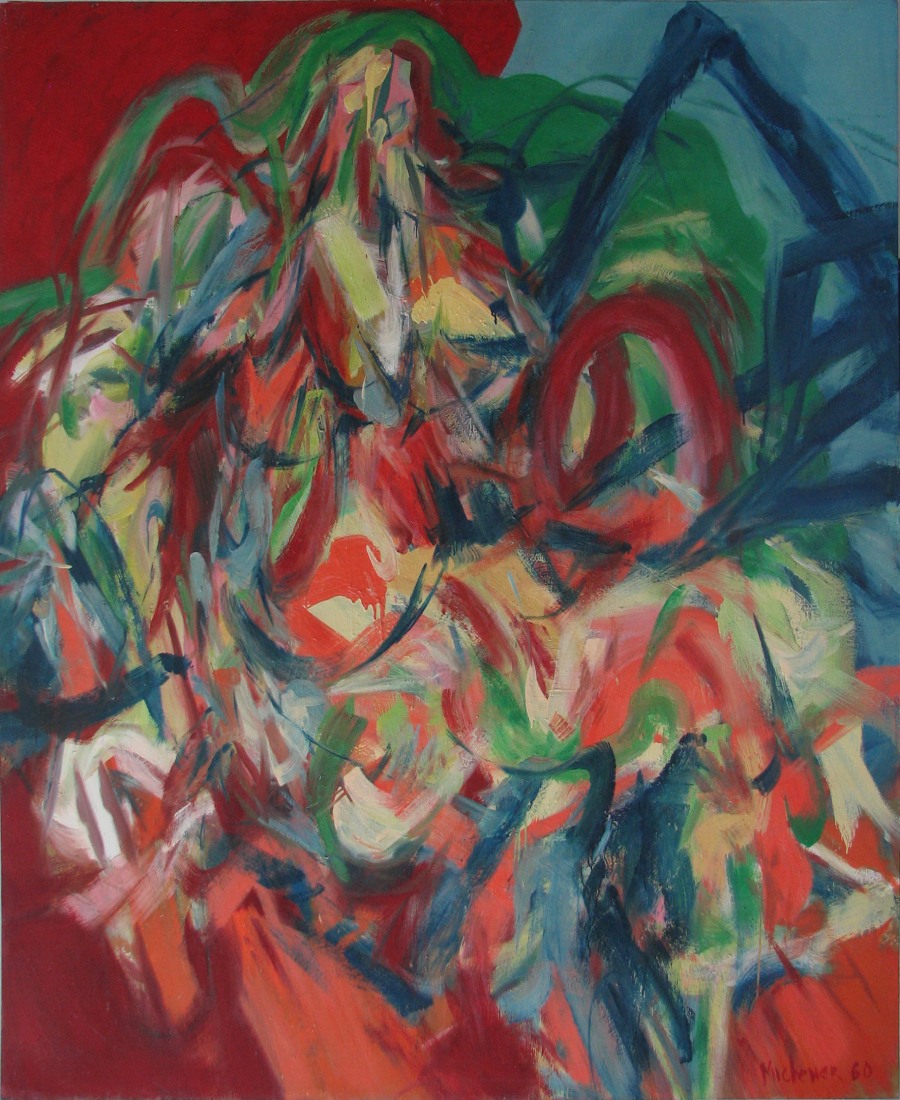
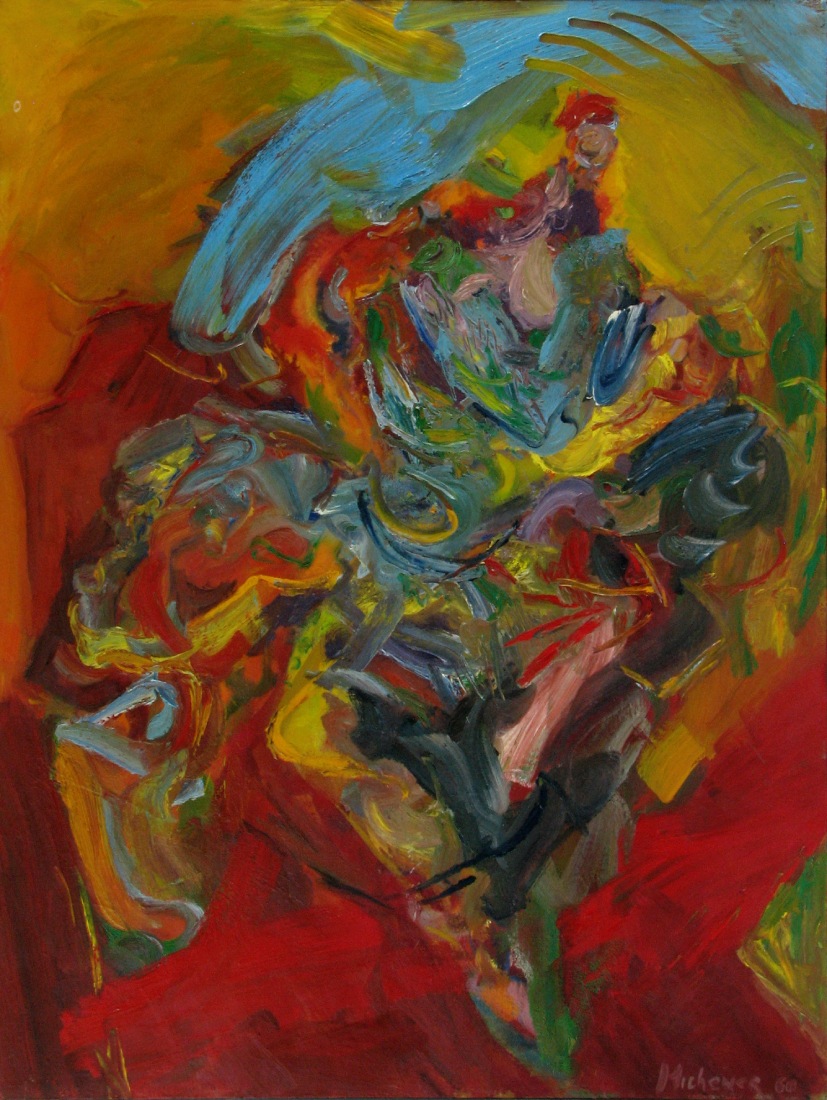
Like most artists of my generation my artistic beginnings were in abstract expressionism. Next came a period of abstract figurative work.
-
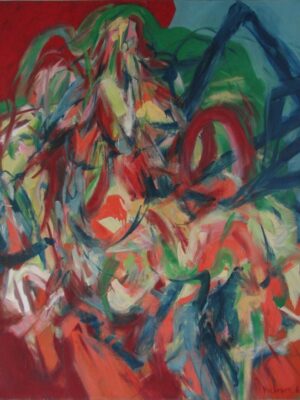
- Red Blooded American Woman — 73" X 60"
-
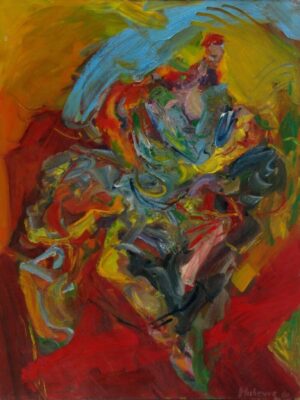
- Man Against Red — 53" x 40"
-
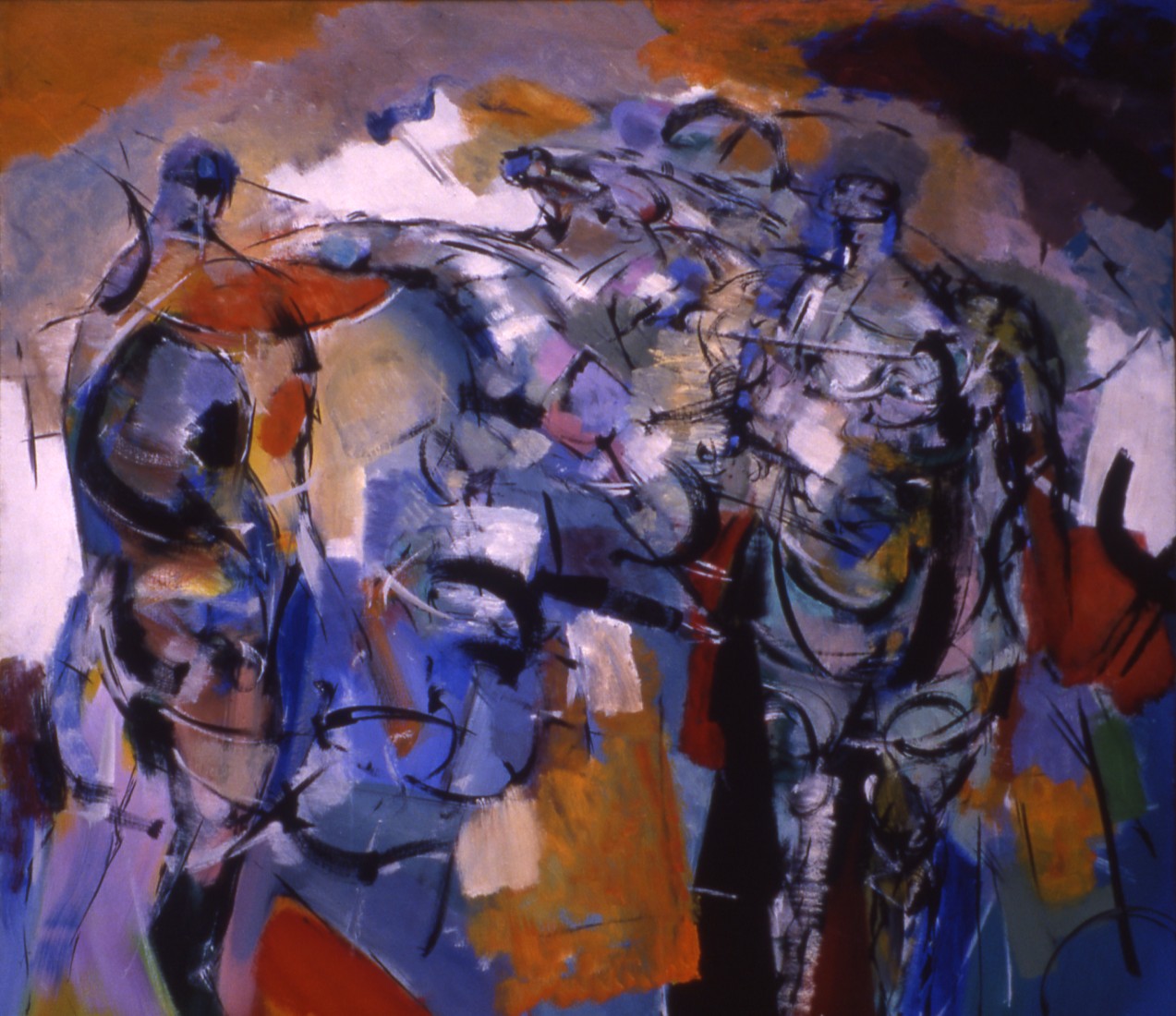
- Woman, Man and Equestrian — 66" X 75"
-
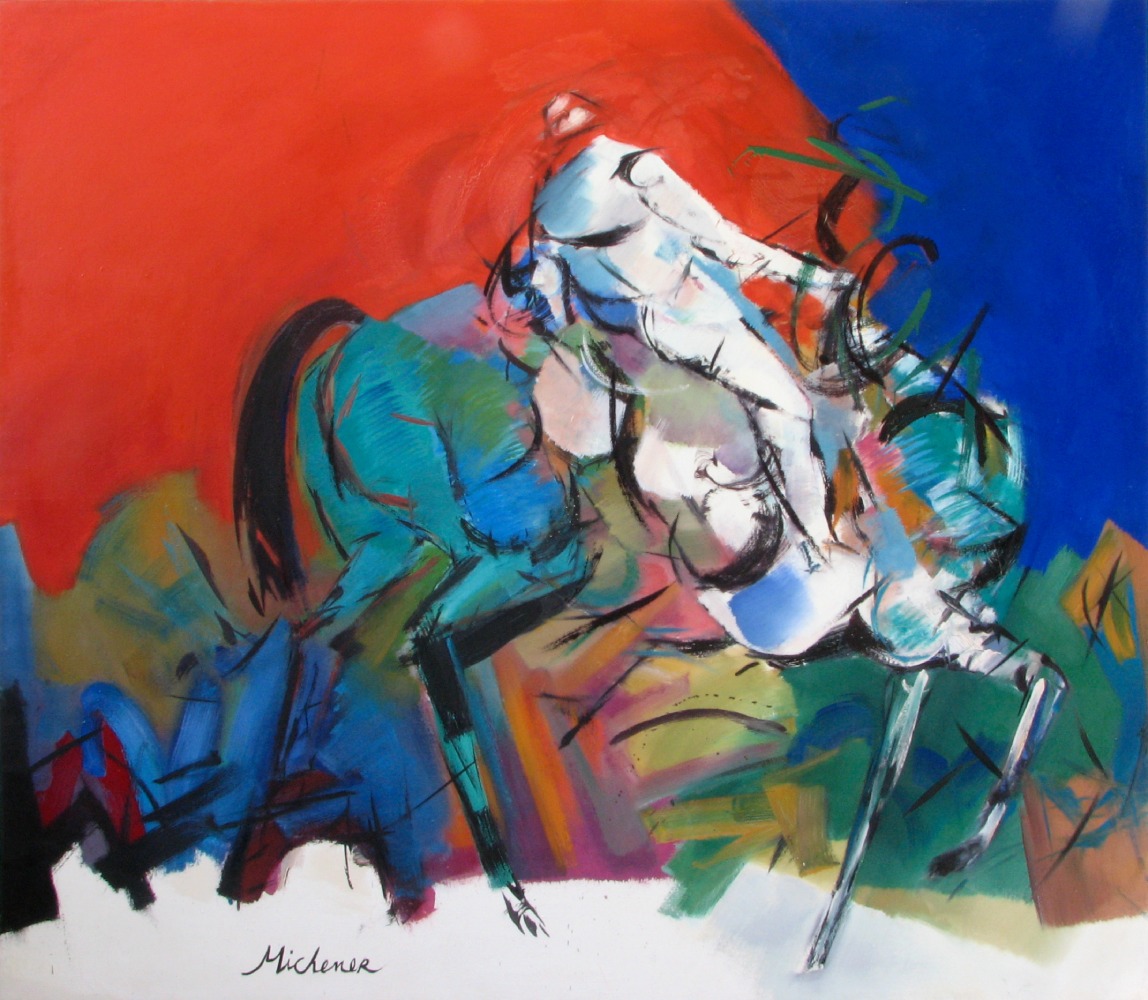
- Horse and Rider — 68" X 76"
-
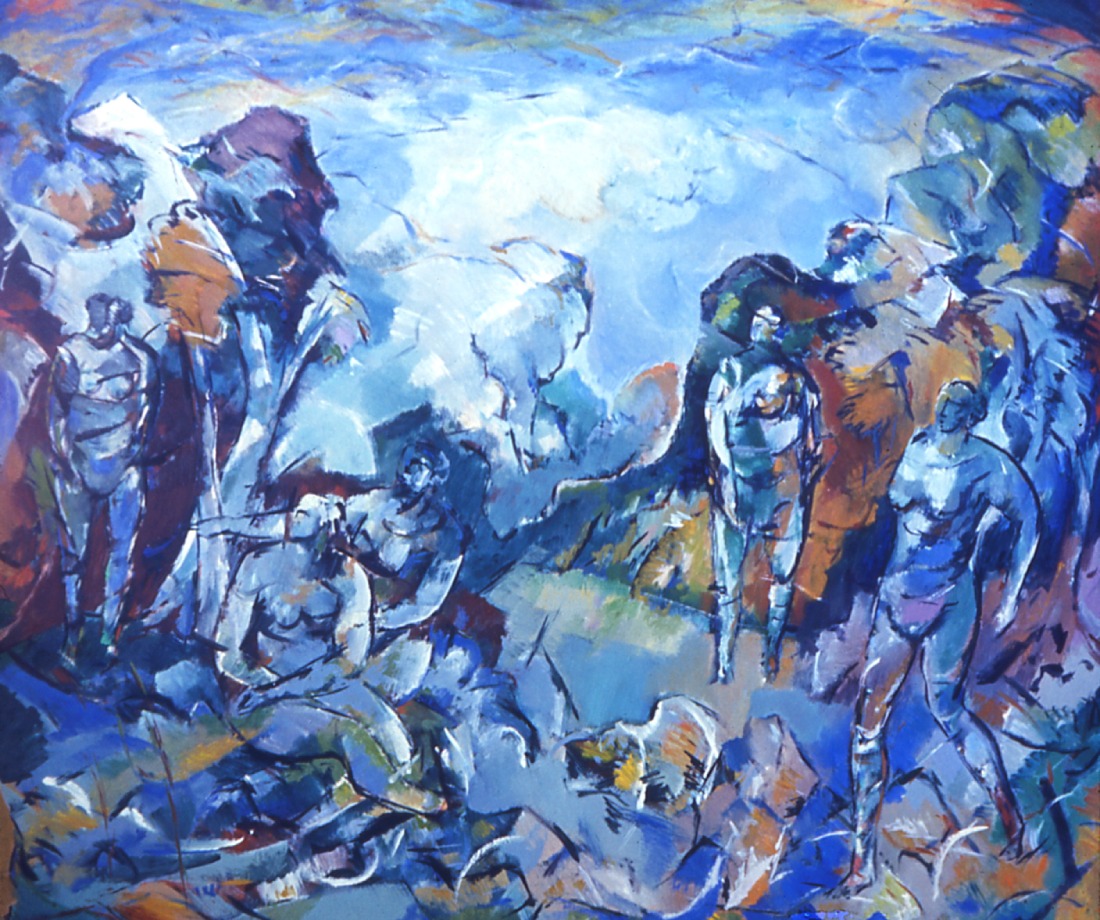
- Ulysses Sighted — 66" X 75"
-
- Pastorale — 53" x 58
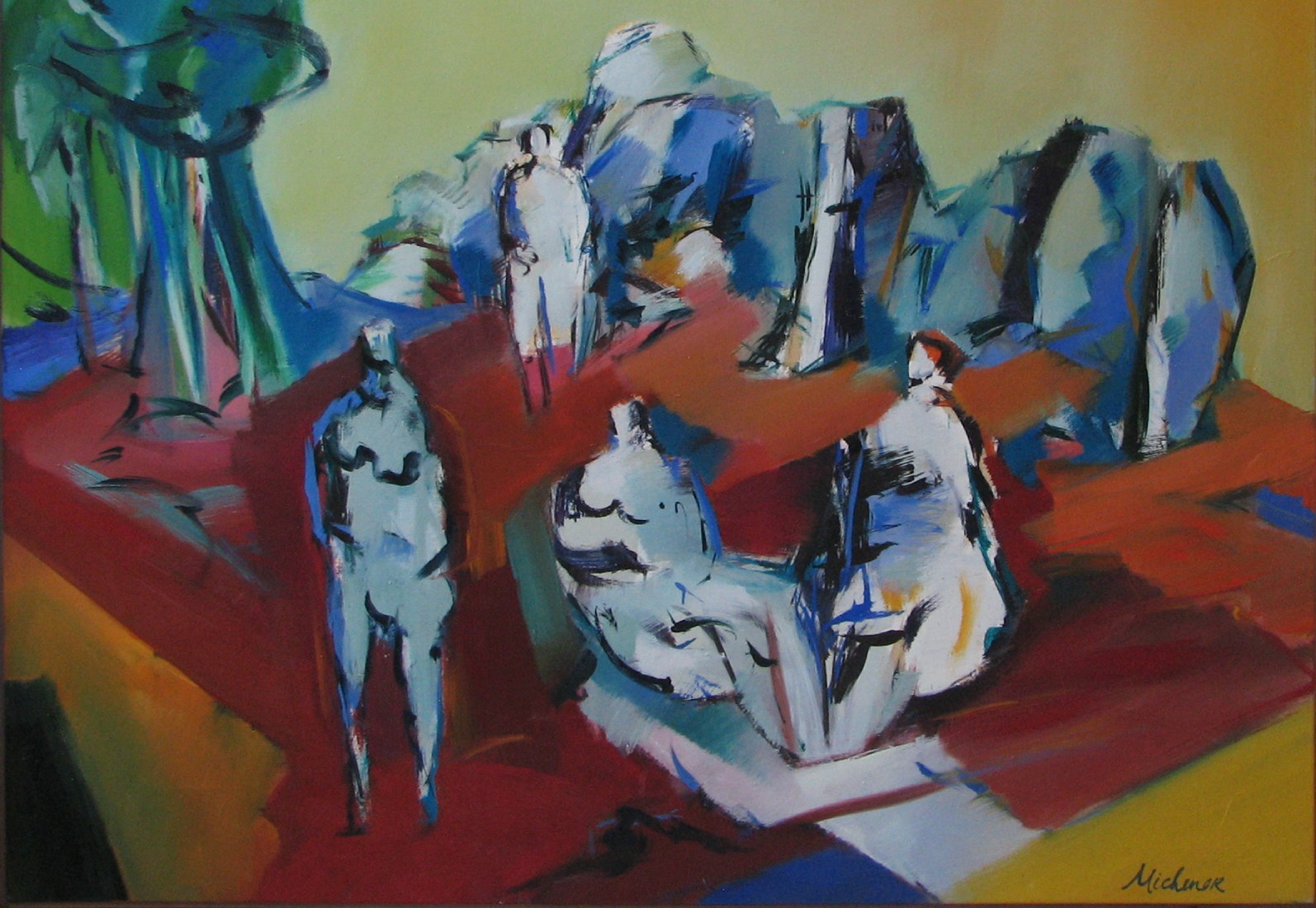
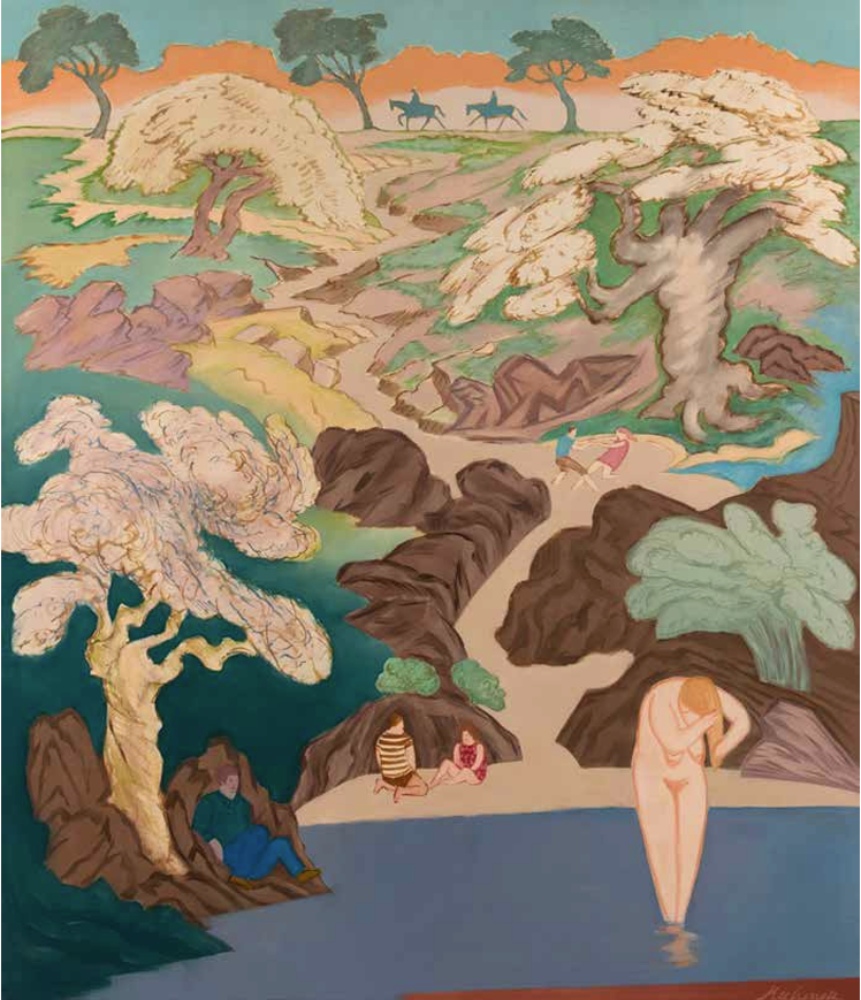
As my direction became more representational, I looked to Cezanne’s and Renoir’s bather paintings as the most recent in the Arcadian tradition. The word derives from Arcadia, a mountainous state in ancient Greece, whose inhabitants dwelt in bucolic harmony with the earth and its creatures. My goal was to create a visual metaphor for a life affirming future, in which mankind lives in harmony with nature.
-
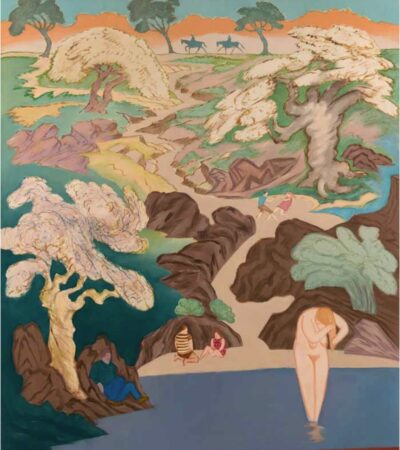
- Gentle On My Mind — 88" X 76"
-
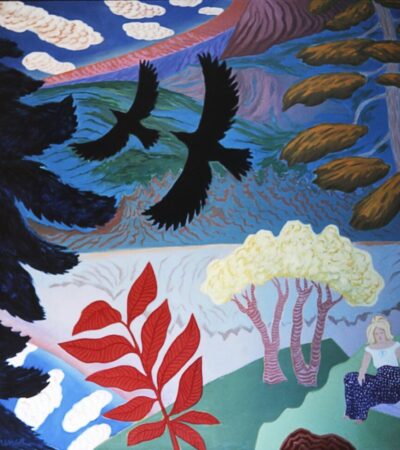
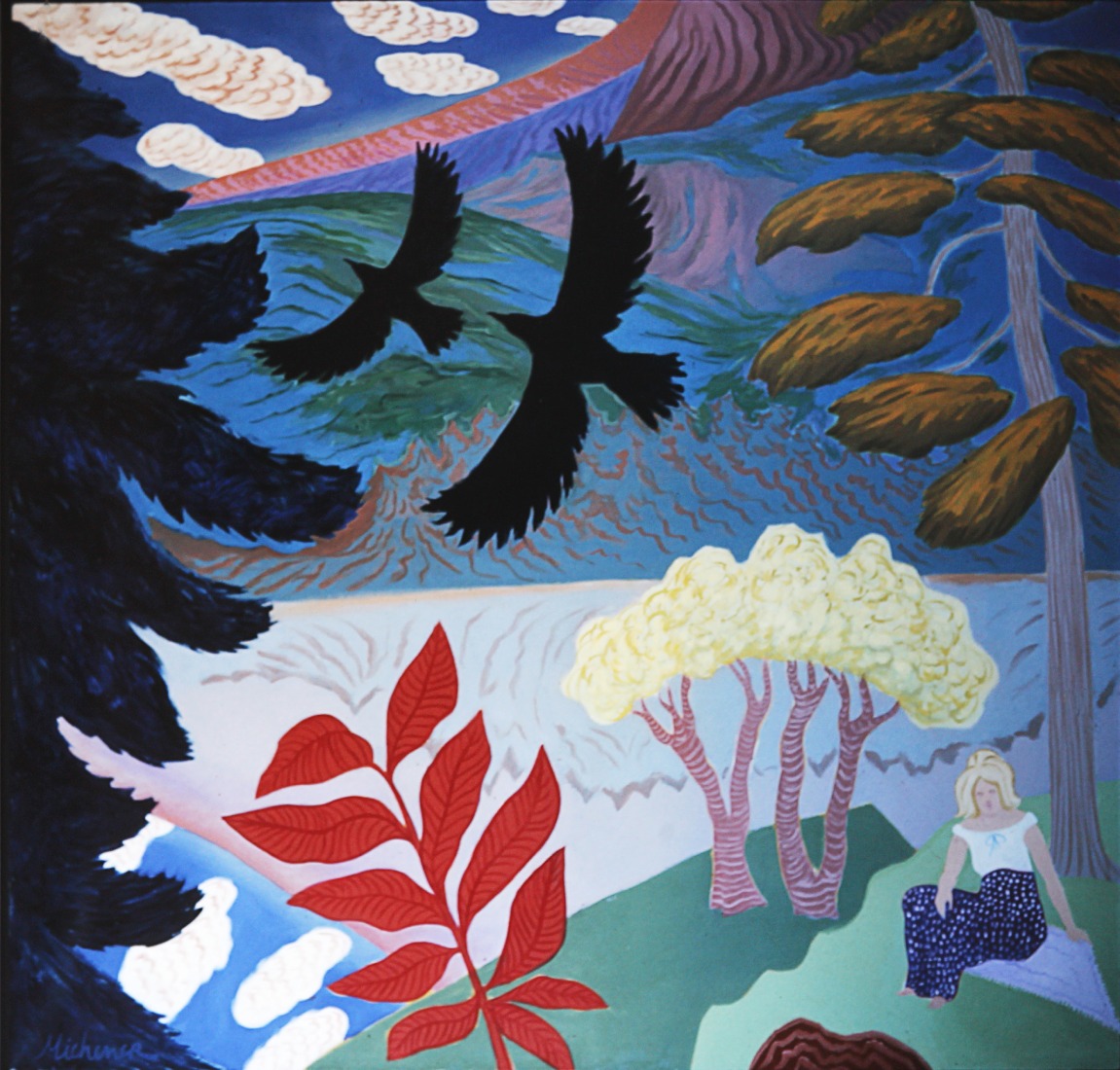
- Crows Over Lake Whatcom — 75" X 77"
“Gentle on my Mind” is designated as a cultural property. It is in the collection of the Surrey Art Gallery. You can read about the painting here.
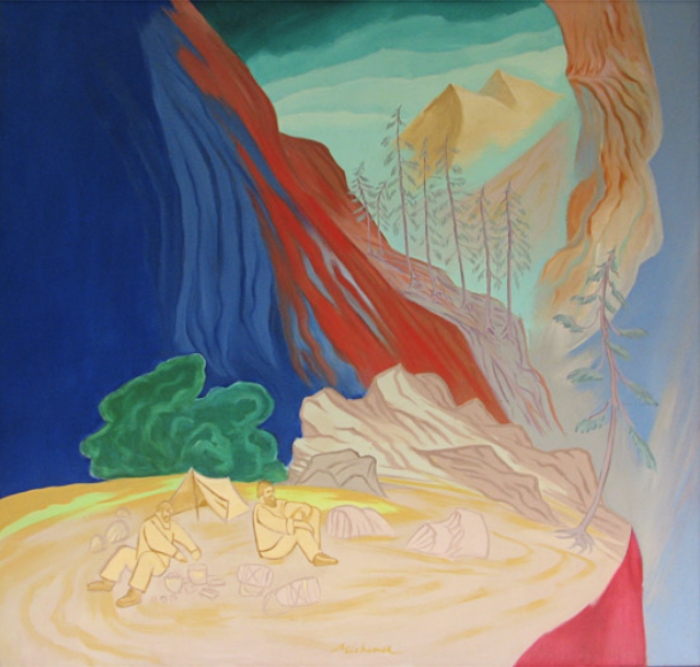
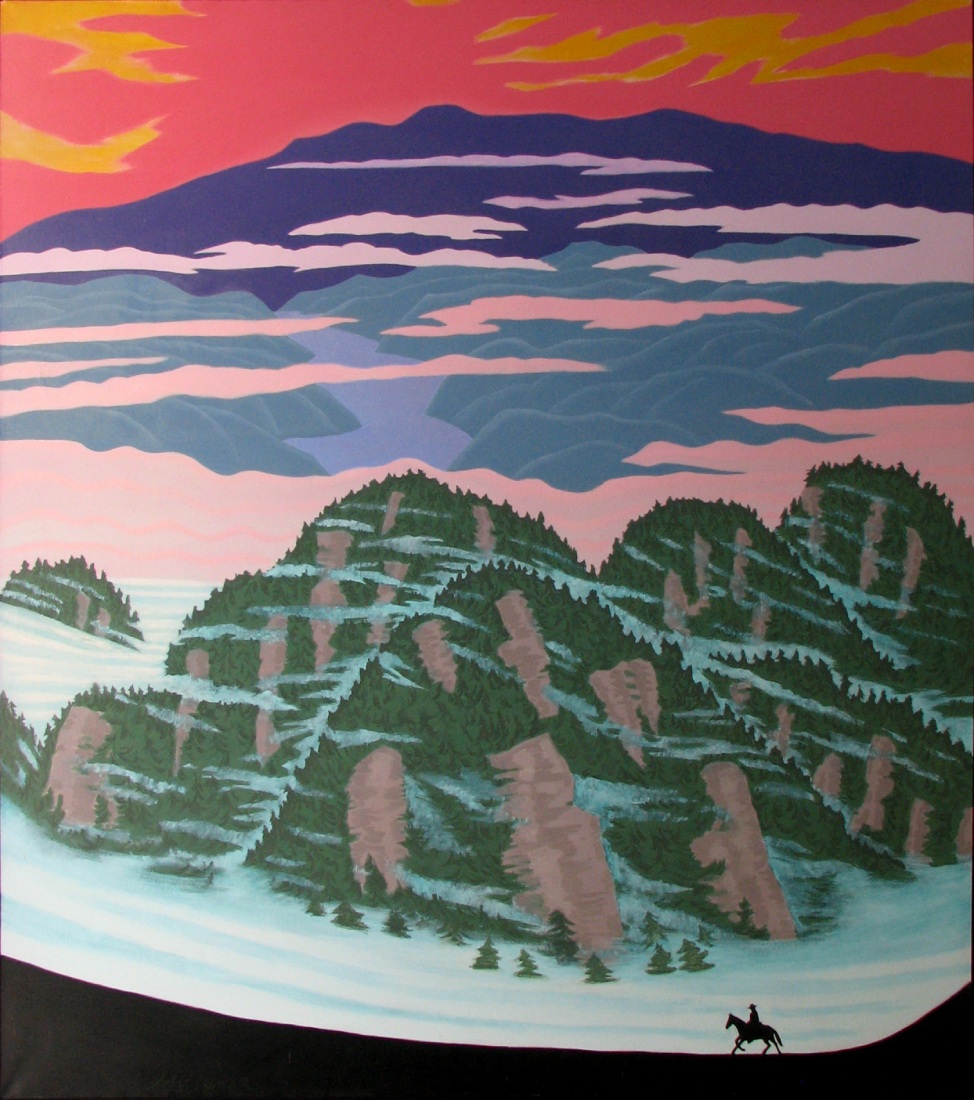
A strong influence on my painting has been traditional Chinese and Japanese painting. Here the figures are often tiny and seem embedded within the natural world. I believe that those felt qualities which predominate in Eastern art are needed by us if we are to learn to enter into a cooperative, reciprocal relation with nature.
-
- Days End — 77" X 75"
-
- Looking Eastward —78" x 68"
-
- The Scout — 68" X 76"
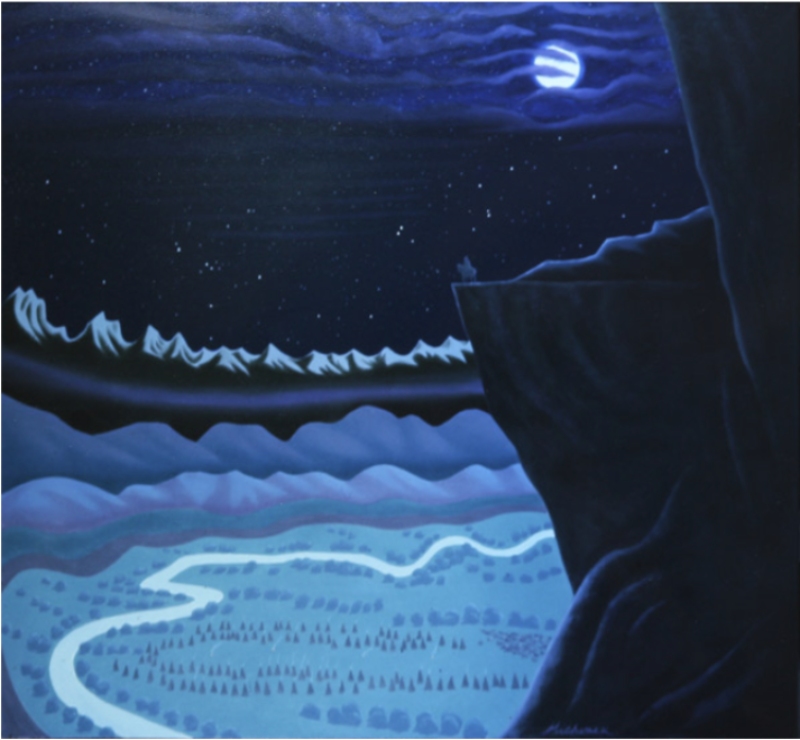
I wanted to create symbols for feelings of playfulness, gregariousness, gentleness and feminity in relation to landscape imagery, without losing the representational elements of landscape, and without losing what I consider to be essential in our interplay with landscape – that is, its space.
To convey feelings of interaction, of being part of things, of empathy with nature, I arranged the elements of landscape – the land, water, sky, trees, rocks, etc., the near, middle, far – in such a way that the viewer is led to play with these same elements and to interact with them.
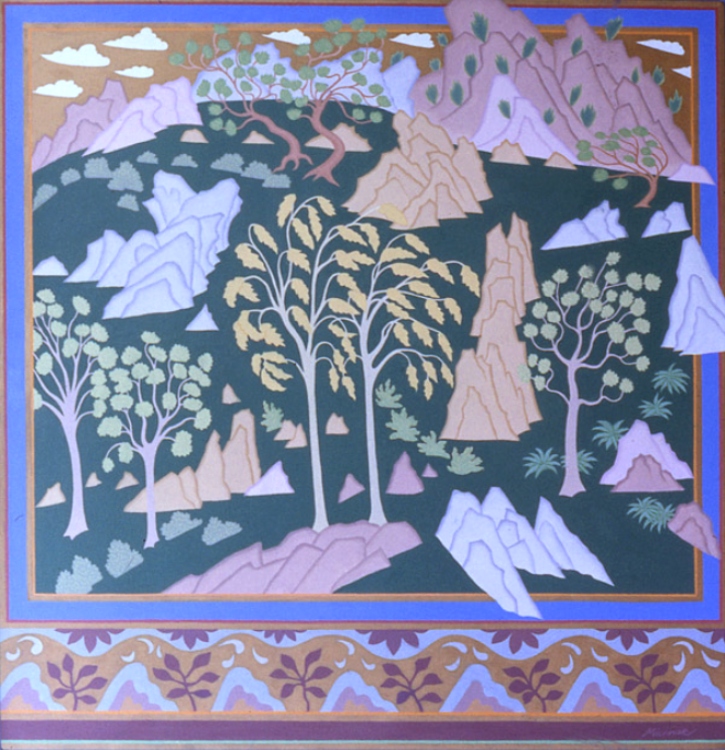
I used bands of abstract patterns to interrupt the scenes and to establish contradictory relationships on the picture plane. I tried to avoid the literal appearance and the logic of perception which results when nature is kept at a distance, in favor of the playful perception we have of nature when we are actually in it.
-
- Gentle On My Mind II — 51" x 51"
-
- Strawberry Roan — 55" X 67"
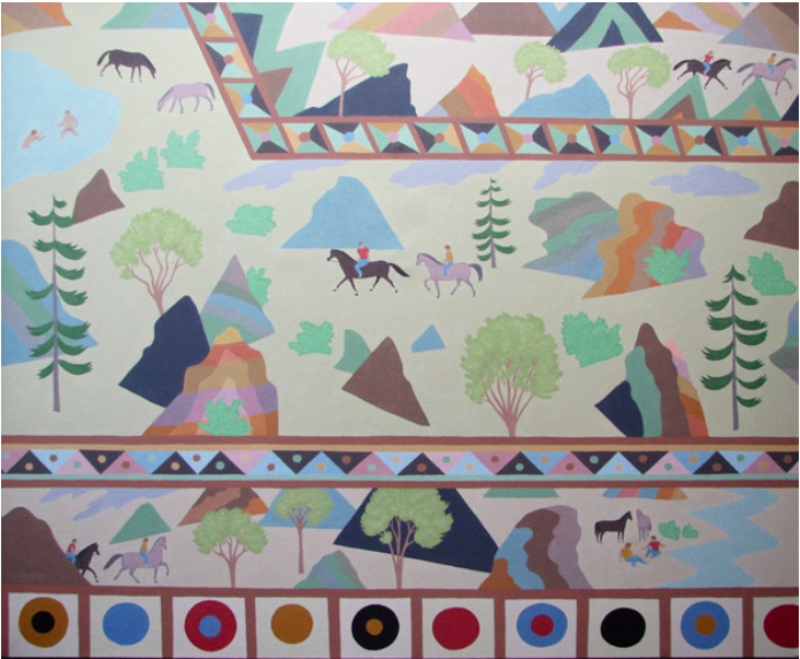
-
- Two Canoeists — 76" X 68"
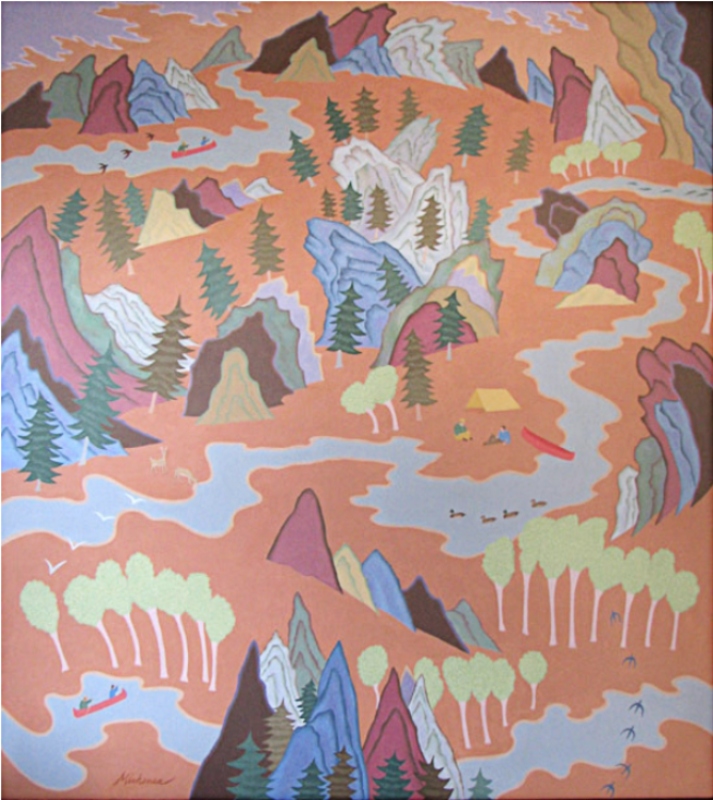
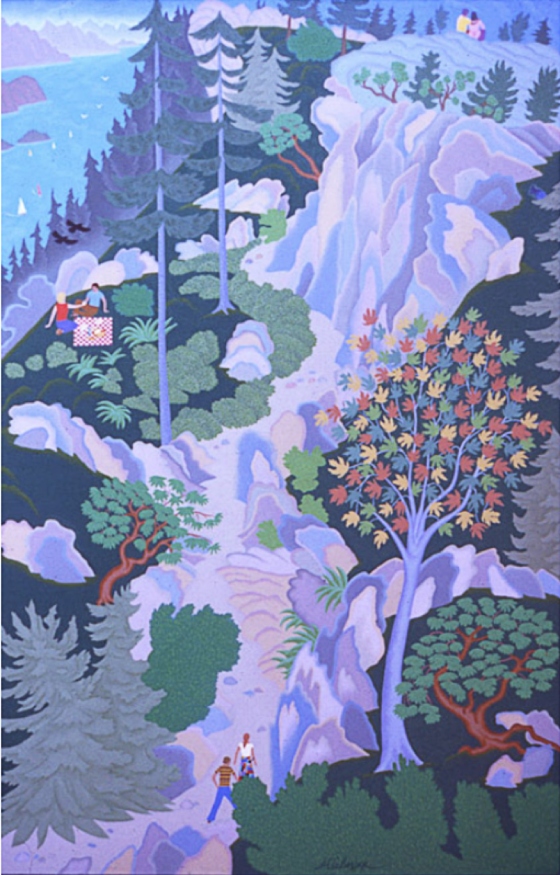
Sometimes I portrayed more than one scene in the same picture so that penetration of the space at one point is contradicted by a return to the picture plane at another. I made use of narrative in my subject matter to introject an illusion of time. I played jokes with scale. Mountains and figures bear no relation to their actual sizes.
-
- Indian Summer — 75" X 50"
-
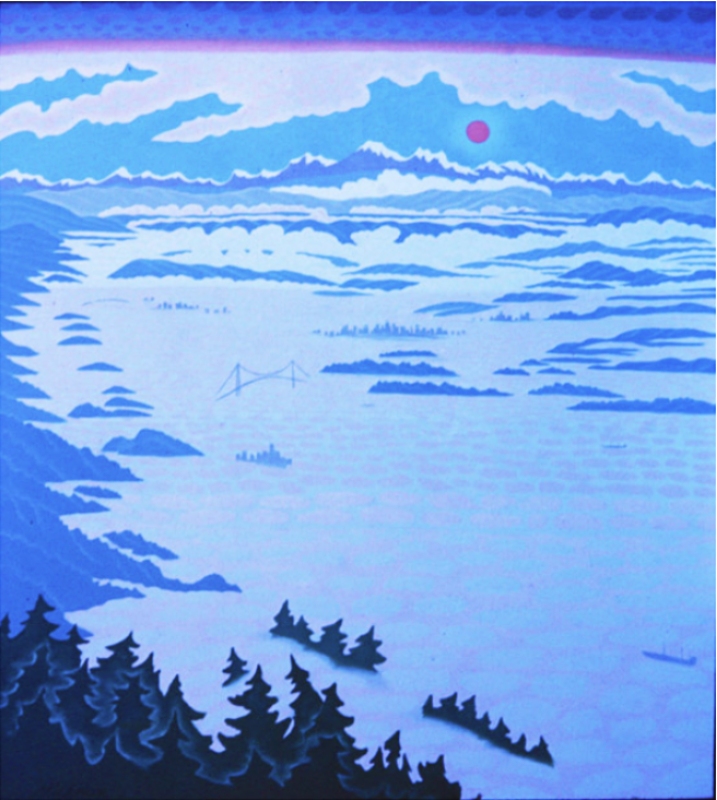
- Vancouver in Ground Fog — 76" X 68"
-
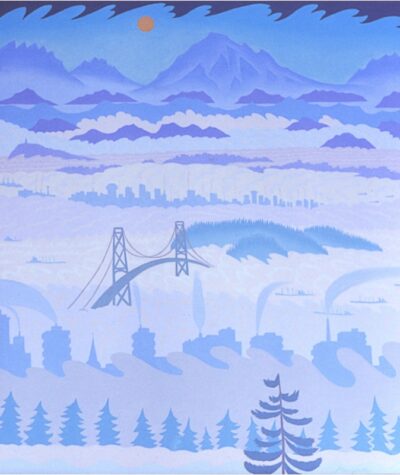
- Vancouver in Ground Fog ll — 64" X 50"
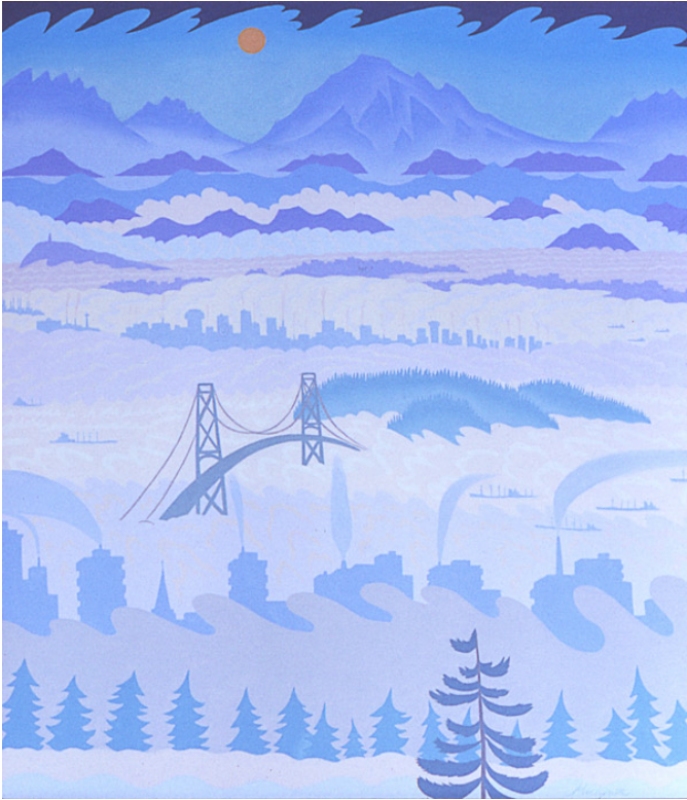
I raised horizons. I used ambiguous and playful aerial views. I warped perspectives and interjected close-up elements such as rock forms and foliage at the top of the picture. I compressed the space. I interrupted spatial continuity with arbitrary bands of cloud forms.
-
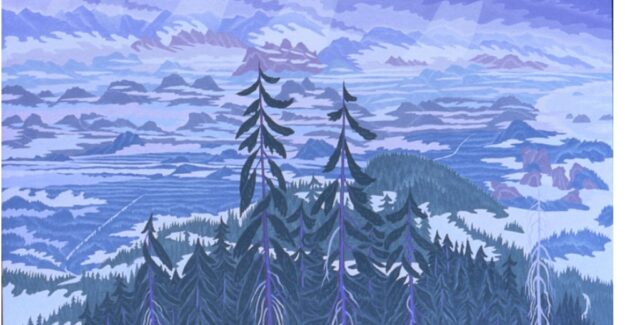
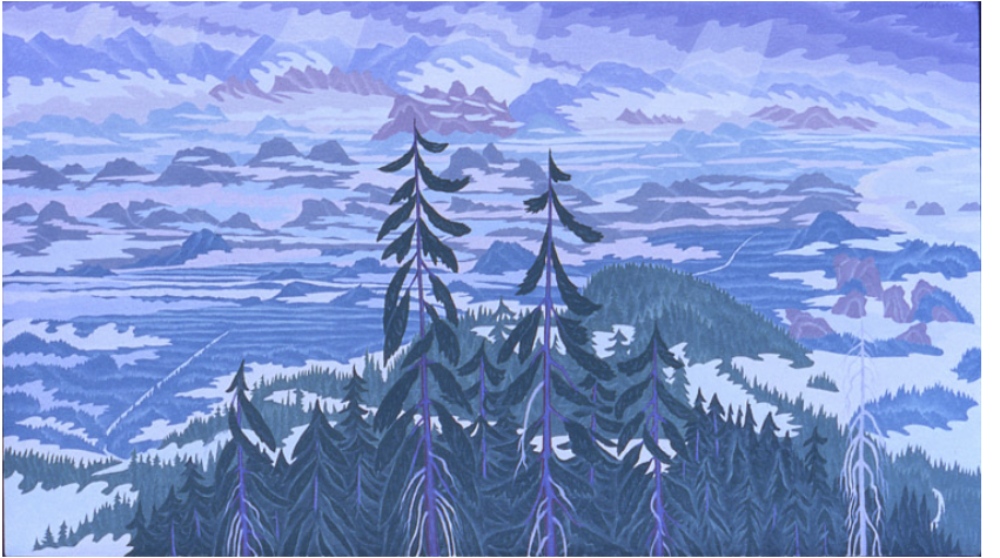
- From the Lookout — 36" x 50"
-
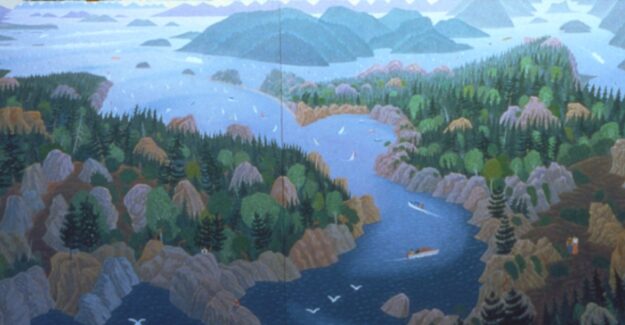
- BC Panorama, White Rock to Anvil Island — 76" X 156"
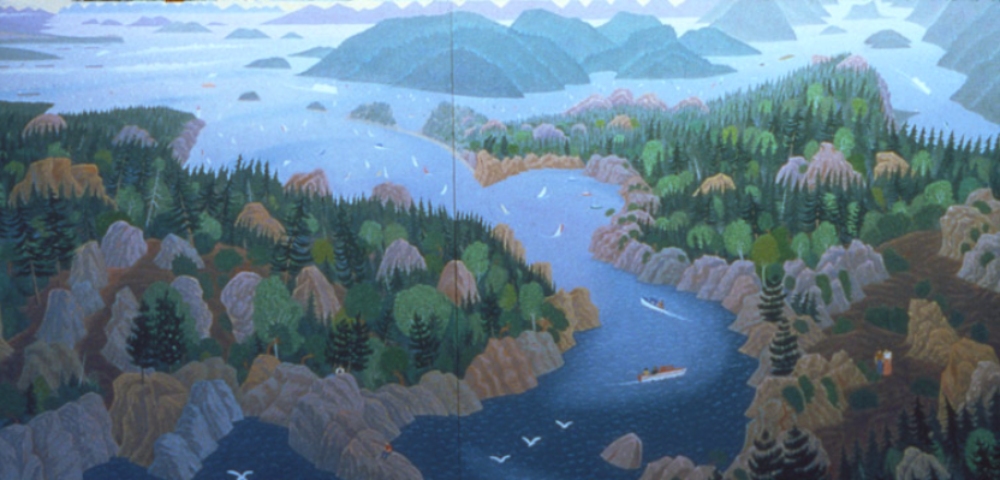
In my Howe Sound paintings the human presence became diminutive compared to the grandeur of mountains.
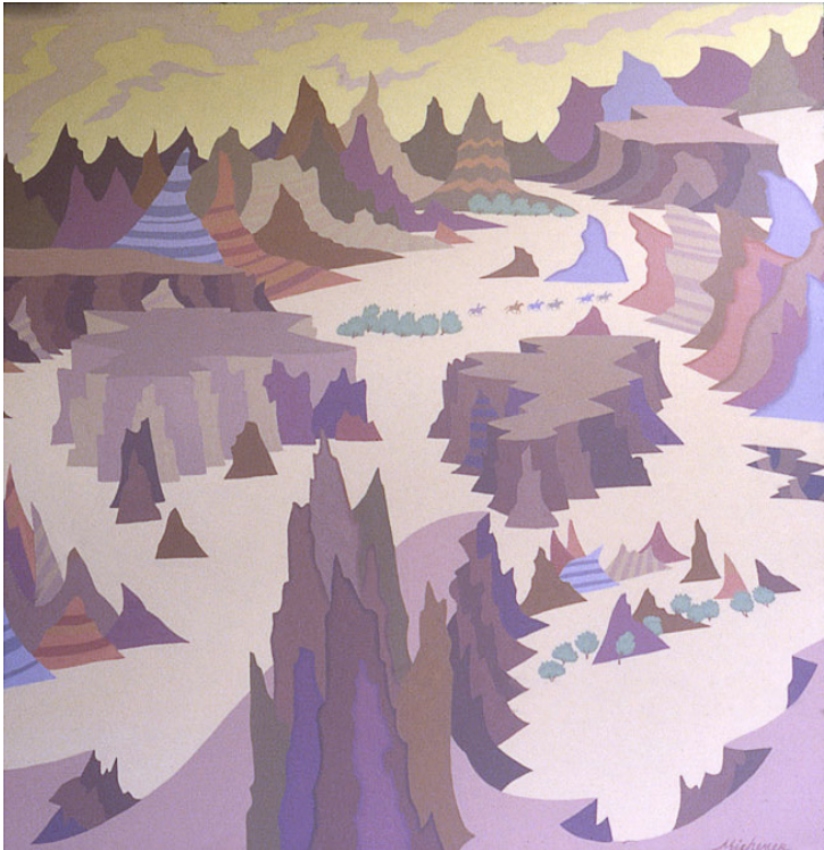
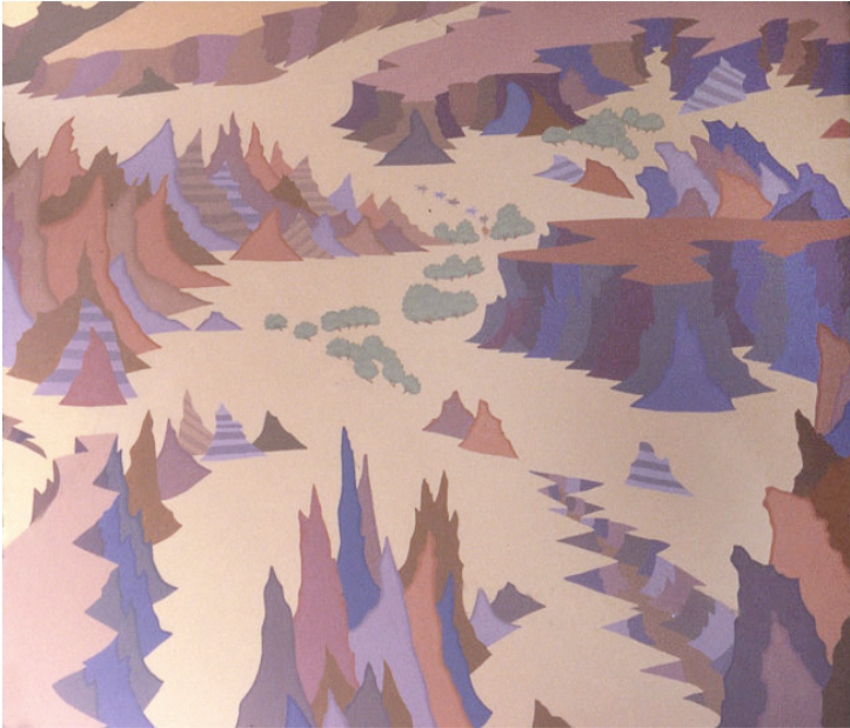
I explored mural scale landscape painting, as a means of involving and enveloping the viewer in the motif as a participant. The Badlands motif appealed to me for its vast and untamed character. It is not humanized. It suggests to me a true relationship between man and nature.
Always I have tried to identify with nature and to participate in the exuberance of natural processes. I hope my paintings invite others to do the same.
-
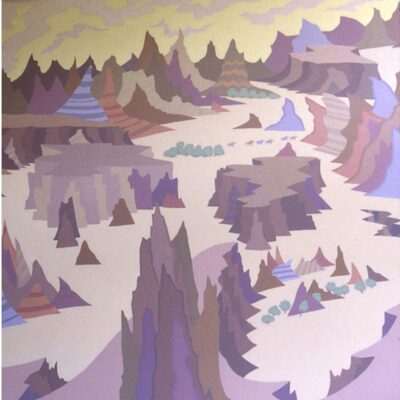
- Riding the Badlands Dawn to Dusk — left panel of triptych —77" X 77"
-
- Riding the Badlands Dawn to Dusk — centre panel of triptych — 77" X 87"
-
- Riding the Badlands Dawn to Dusk — right panel of triptych — 77" X 77"
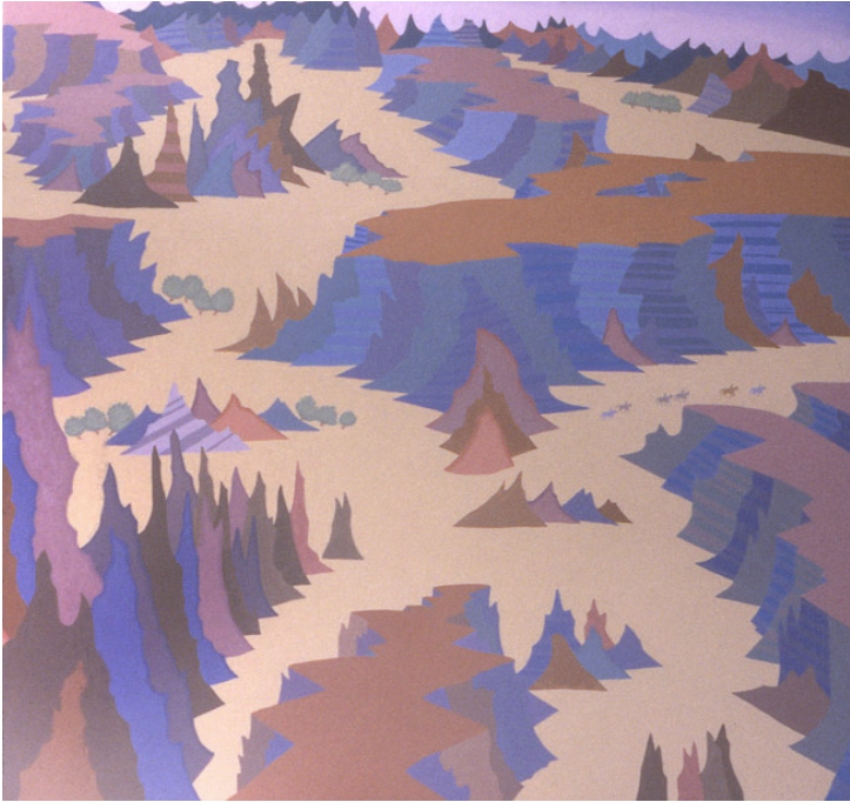
This tryptich is a designated cultural property. It is in the collection of the University of Lethbridge.