About
Robert Michener is a distinguished senior British Columbia artist whose work has focused on the complex interface between nature and culture, or, more precisely, on the attitudes and ethics of human beings in relation to the natural environment. Through his highly detailed and complexly patterned landscape paintings, which synthesize a multitude of art historical references and personal experiences,
He advocates “a gentler, more reciprocal relationship with nature. At the same time, he investigates the illusion of space on the flat picture plane, combining
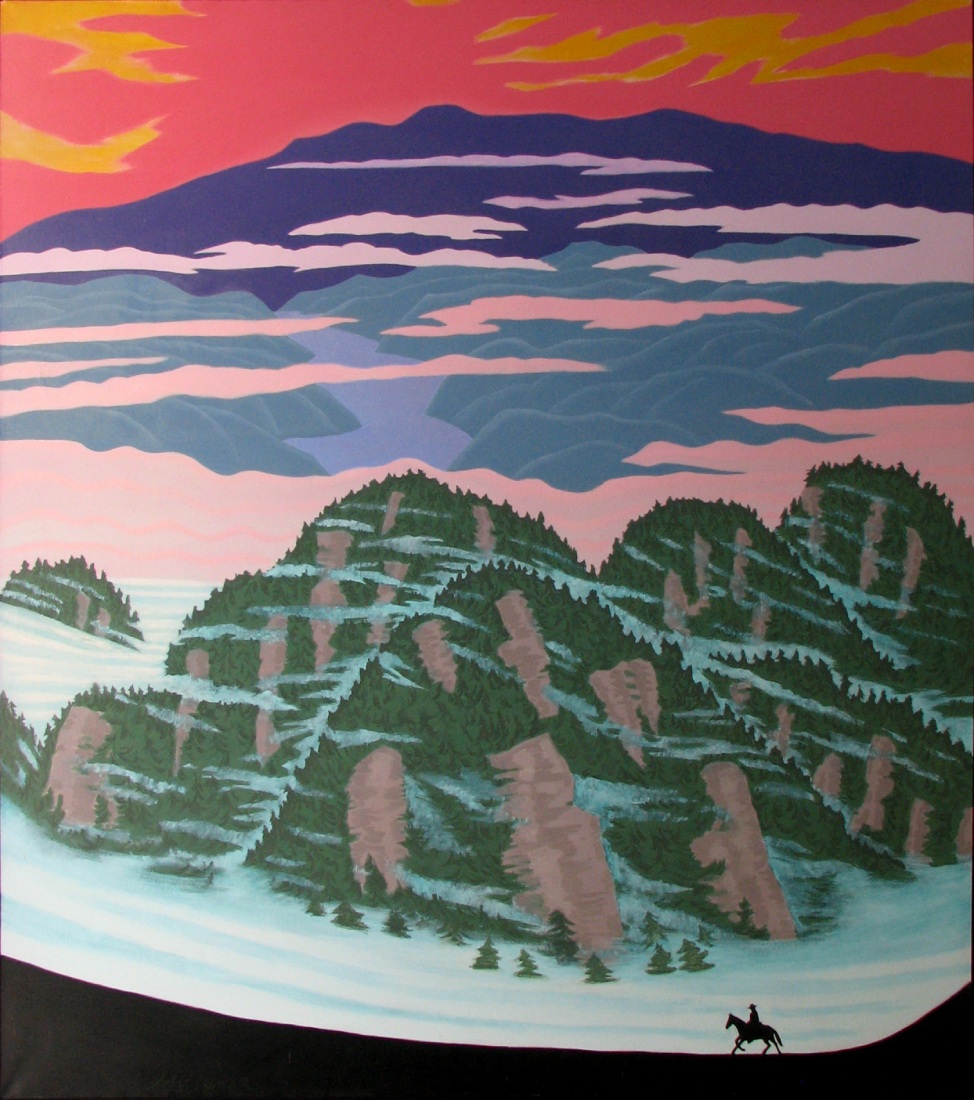
different formal and perspectival traditions from the two-dimensional art of Asia, Europe and the Middle East. By introducing human figures into the landscape, he has also consistently invoked the Arcadian theme in Western painting, alluding to an idealized rural place in which human beings exist in harmony with nature. The diminutive size of many of his figures also invokes traditional Chinese landscape
painting, in which the scholarly painter-poet lives in meditative seclusion in the countryside, far from the noisy demands and stifling politics of urban life. As in the Chinese tradition, the disproportion of tiny figure to immense landscape in many of Michener’s works proposes both the grandeur of nature and the human being’s complete immersion in (rather than separation from) the natural world.
Michener is best known for his thematically linked series of large-scale, lyrical landscape paintings, including the “Howe Sound” series and the
“Badlands” series of the 1970s, and the “Farm Paintings” of the 1980s and early 90s. The latter works, among his most successful, are inflected with
elements of folk realism while communicating both our dependence upon the land and the possibilities of our fruitful and peaceful stewardship of it.
More recently, Michener has created idyllic landscapes that allude to the specific topographical features of his childhood, but that also incorporate aspects of other rural places he has travelled through and studied
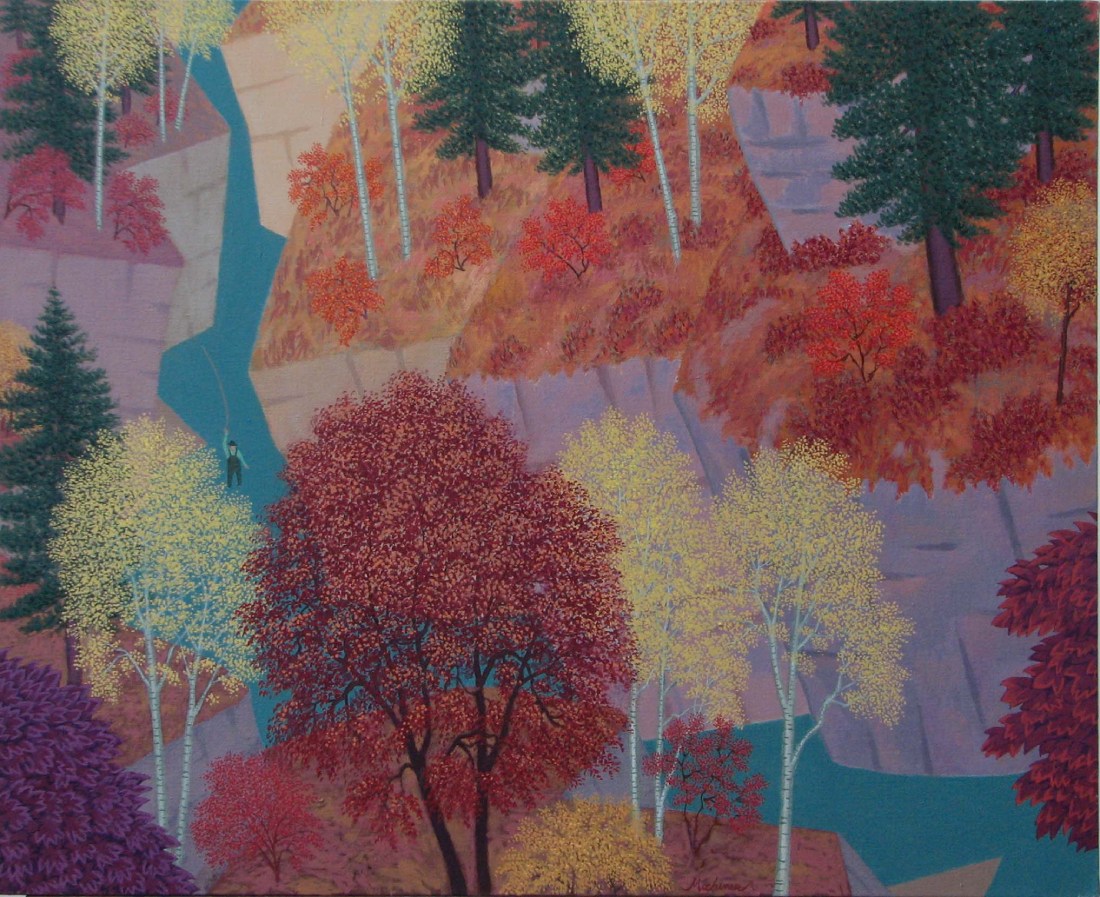
in his adult life. in the playfully named “Gorgeous Gorges” series, these landscapes are peopled by tiny figures standing in the middle of streams and rivers, fly-fishing — a recurring metaphor for peaceful co-existence with the natural world.
Robert Michener: Natural Harmonies
Robin Laurence, 2014